Casting Darkness Aside this Solstice - How to Prevent Child Sexual Abuse
Our headlines these past few weeks have been filled with stories of children being sexually assaulted and abused — from the release of the Epstein files to, here at home, the painful revelations involving a Jehovah’s Witnesses congregation on the Kenai Peninsula.
These stories, and others that have surfaced over the years, follow a familiar and heartbreaking pattern. Too often, institutions and organizations across sectors default to internal handling instead of reporting serious cases like this to the proper authorities, creating conditions where harm can continue unchecked. Warnings were voiced. Adults heard concerns. Still, nothing meaningful happened. Complaints lingered, children remained in harm’s way, and communities that should have been safe places instead became home to abuse and sexual assault.
Per the 2024 Felony Level Sex Offenses Crime in Alaska Report, over 50% of all reported felony-level sexual assault victims in Alaska last year were under the age of 18 - a staggering reflection of who is most vulnerable in our state. The most commonly reported age for female victims was 13 years old, and 14 years for males. Over 90% of these children and youth were sexually assaulted by someone they knew – not a stranger.
These stories and data force us to confront uncomfortable truths - not only about how institutions respond, but about how our society talks about child sexual assault/abuse. Recent commentary in the national media has suggested that teen victims are ‘almost legal,’ a deeply harmful myth that minimizes predatory behavior and normalizes abuse.
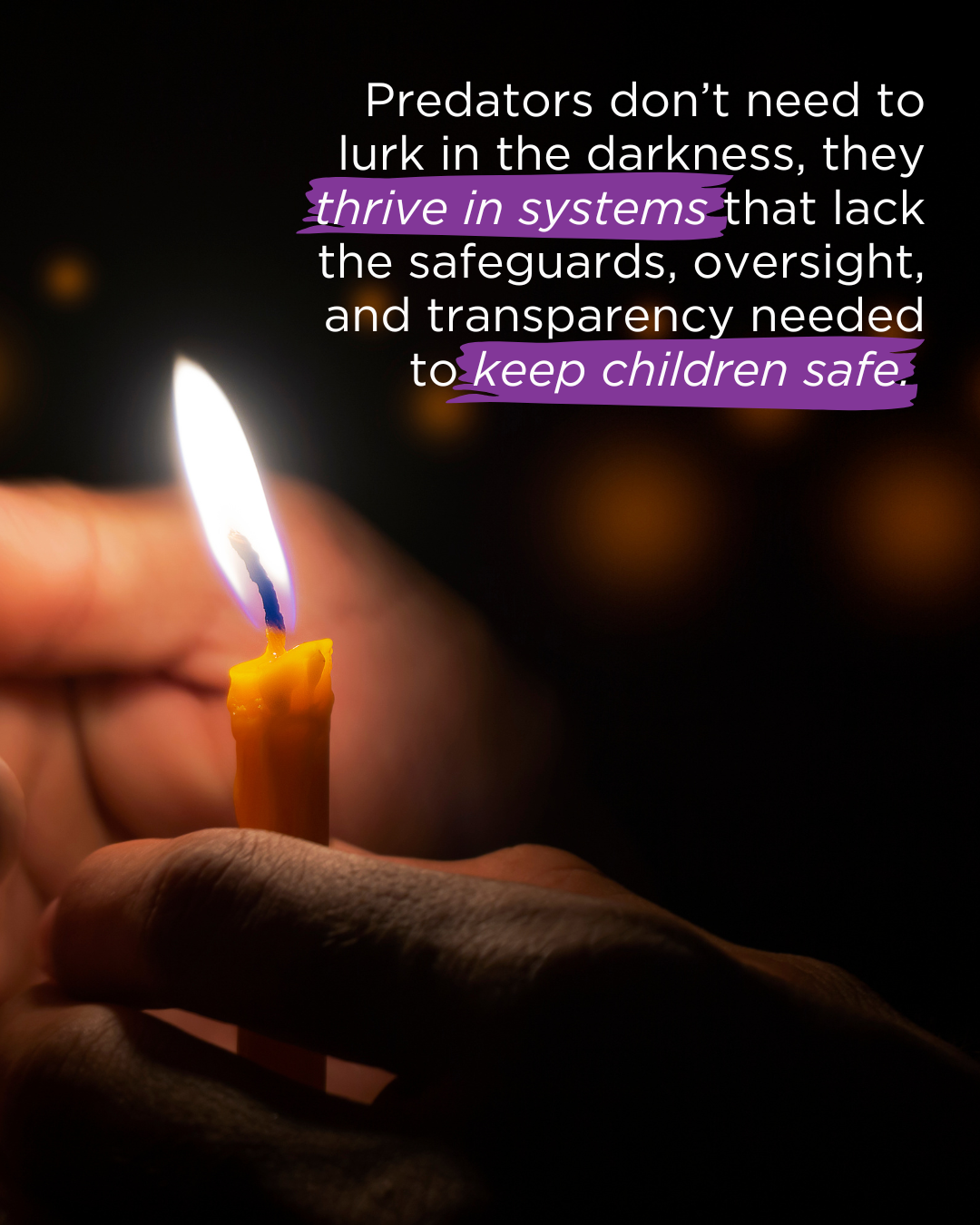
Predators don’t need to lurk in the darkness, they thrive in systems that lack the safeguards, oversight, and transparency needed to keep children safe. We must begin with real prevention, well before a child ever discloses harm. That means parents, teachers, faith-leaders, coaches and all caring adults must learn to recognize grooming behavior: building trust, isolating a child, desensitizing boundaries, introducing intimacy, testing secret-keeping, and maintaining silence. We must ask questions when something feels “off,” and insist that no adult has unmonitored access to a child. Children need straightforward education like correct names for body parts, the right to say no, that no adult should ask them to keep a secret, and how to identify trusted adults they can turn to. Before your child joins a group, you should assess the organization’s prevention policies, ask about one-on-one supervision and what clear reporting looks like. Institutions must adopt strong prevention policies, enforce clear codes of conduct, ensure only vetted and trained adults should ever be alone with a child, and even then in supervised and public spaces, and create transparent reporting systems that prioritize children’s safety over protecting the organization.
“All caring adults must learn to recognize grooming behavior: building trust, isolating a child, desensitizing boundaries, introducing intimacy, testing secret-keeping, and maintaining silence”
The tragedy in Kenai shows exactly what happens when trusted adults and institutions fail children. When leaders lean on internal doctrine instead of reporting obligations, when they fear reputational damage more than a child’s safety, and when they choose secrecy over transparency, the harm only deepens. Survivors are left carrying the weight of silence for decades. Communities fracture. Trust erodes. And abusers remain protected by internal culture, confusion, and complacency. While these truths are painful, they can point Alaskans toward what can actually prevent abuse.
Alaska must do better.
Learn more how you can prevent child sexual assault/abuse by going to:
https://www.alaskachildrenstrust.org/csa-prevention.
If you are a victim, your voice is powerful – telling your story can help prevent child sexual abuse.
Learn how to share your story at: https://www.storiesact.org